The West Highland Way is 154 kilometres from Milngavie to Fort William. The official website suggests completing it in around eight days. That works out to roughly 19 kilometres daily — a solid day's walking for a fit adult travelling light. You are not a fit adult travelling light. You have a toddler. This itinerary breaks the full West Highland Way into 14 days of 8 to 12 kilometres each. It accounts for toddler pace, carrier weight, rest days built into the schedule, and the reality that some sections of this route are genuinely tough even without a small human on your back. It also tells you exactly where to camp, where the facilities are, and where to use baggage transfer so you are not destroying yourself on the hardest days. This is the itinerary I wish had existed when I walked the southern section with my two year old. Consider it your starting point.
Before You Go — The Essentials
Wild camping rules
Wild camping is legal in Scotland under the Land Reform Act — with one critical exception. Between 1st March and 30th September, camping byelaws are in effect along the eastern shore of Loch Lomond from Drymen all the way to just beyond Rowardennan. During this period you must camp only at designated campsites or permit areas in this section. This covers the bulk of Days 3 to 6 in this itinerary. Plan your overnight stops accordingly.
Baggage transfer
This is not optional if you are walking with a toddler. Baggage transfer services collect your full pack from your overnight stop each morning and deliver it to your next stop, leaving you free to walk with just a day pack and your child. On flat easy days you may choose to carry everything. On hard days — the Loch Lomond shoreline, the Devil's Staircase — use the transfer. Your body will thank you. Services operating on the WHW typically charge around £10-15 per transfer and include Baggage Freedom and AMS Sherpa. Book in advance.
The carrier question
You will need two carriers for this trip if you are doing it properly. The Trail Magik clips directly onto the back of your rucksack so your toddler rides above your pack rather than you trying to wear two separate things at once. This is the carrier for days when you are carrying everything. The load distribution is completely different from trying to use a standard carrier with a full pack — it makes a meaningful difference over long days. The Ergobaby Omni 360 or similar structured carrier is better for days when you have sent your pack ahead and are walking with a day pack only. Better lumbar support, more comfortable for both of you, and a toddler can fall asleep in it without the whole setup becoming unwieldy. Use both. Switch between them depending on what you are carrying that day.
Getting there
Milngavie is 30 minutes by train from Glasgow Central. Fort William is connected to Glasgow by both train and bus. The Caledonian Sleeper from London to Fort William is a brilliant option if you are travelling from further afield and one that a toddler will absolutely love.
Interactive Map
Our West Highland Way Route
Want this route on your own phone? Download the map file and import it into Google Maps.
Download Route (KML) →The 14 Day Itinerary
Day 1 — Milngavie to Drymen Campsite
Distance: approximately 10km
Terrain: easy — flat, well maintained paths through woodland and farmland
Overnight: Drymen Campsite (Easter Drumquhassle Farm) — facilities available
This is your gentlest day and the perfect introduction to the route. The path leads out of Milngavie through wooded trails and rolling farmland — nothing dramatic, nothing technical, just you and your toddler finding your rhythm. The official stage runs the full 19km to Drymen but for a toddler trip you stop at Drymen Campsite at around the 10km mark. Drymen itself has a shop, a pub and a cafe — stock up here because the next reliable resupply point is Balmaha.
Stace's Tip
This first day is deliberately easy. Use it to check your pack weight feels manageable, your carrier fit is right and your toddler is happy with the routine. Don't push the distance on Day 1.
Day 2 — Drymen to Balmaha
Distance: approximately 10km
Terrain: moderate — includes the climb up Conic Hill
Overnight: Balmaha — Oak Tree Inn or nearby accommodation
Important: Camping byelaws are in effect from Drymen onwards from 1st March to 30th September. Camping is permitted only at designated sites from this point until beyond Rowardennan.** Today you climb Conic Hill — the first real ascent of the route at 344 metres. It is a steady climb on a good path and the views from the top over Loch Lomond stretching out below are genuinely one of the highlights of the entire route. The descent into Balmaha is steeper so take your time with a toddler in the carrier. Balmaha sits right on the shore of Loch Lomond and is a lovely stop — there is a shop, a pub and a cafe at the Oak Tree Inn. The pebble beaches along this section are perfect toddler territory. Expect your pace to slow down every time you pass one.
Stace's Tip
Conic Hill is worth every step. Start early so you are at the top before the midday heat if you are walking in summer.
Day 3 — Balmaha to Sallochy Campsite
Distance: approximately 8km
Terrain: moderate — undulating lochside path
Overnight: Sallochy Campsite — basic facilities, composting toilets, beautiful loch setting
This is a short day by design. The lochside path from Balmaha northwards is beautiful but the terrain is more undulating than it looks on a map — lots of short sharp climbs and descents through forest and over rocky sections. With a toddler this section takes longer than the distance suggests. Sallochy Campsite is run by the National Park Authority and sits right beside Loch Lomond. Facilities are basic — composting toilets and water — but the location is stunning. This is one of the most scenic overnight stops on the entire route.
Stace's Tip
The lochside beaches along this section are irresistible to toddlers. Build extra time into this day for paddling stops.
Day 4 — Sallochy to Rowardennan
Distance: approximately 8km
Terrain: moderate — continued lochside path
Overnight: Rowardennan Youth Hostel or wild camping area just beyond
Another shorter day through the continued lochside section. Rowardennan is a small isolated settlement with a youth hostel and hotel — there is no village or shop here so make sure you have supplies for the night and the following day. The youth hostel at Rowardennan is a solid overnight option if you want a proper bed and a hot shower before tackling the toughest section of the whole route tomorrow. Pre-book well in advance.
Stace's Tip
Rest your legs here. Tomorrow is the hardest day on the entire route.
Day 5 — Rowardennan to Inversnaid
Distance: approximately 10km
Terrain: hard — rocky, rooted, undulating lochside path
Overnight: Inversnaid Hotel or wild camping area nearby
The section from Rowardennan to Inverarnan is widely considered the toughest stretch of the entire West Highland Way. The path hugs the rocky northern shore of Loch Lomond through dense woodland — it is constantly up and down, frequently slippery in wet weather, and much slower going than the distance suggests. Breaking this section over two days is the right call with a toddler. Stop at Inversnaid at the 10km mark. The Inversnaid Hotel is the only facility here — fill up your water bottles at the tap outside regardless of whether you are staying there. Use baggage transfer for Days 5 and 6. Do not attempt to carry a full pack through this section with a toddler in a carrier.
Stace's Tip
Get an early start on this section. It takes longer than you expect and the terrain demands full concentration.
Day 6 — Inversnaid to Beinglas Campsite, Inverarnan
Distance: approximately 10km
Terrain: hard — continued challenging lochside path, then easier going to Inverarnan
Overnight: Beinglas Campsite — excellent facilities
The second half of the Loch Lomond section. The path remains challenging through the forest before eventually opening up as you leave the loch behind and follow the River Falloch north to Inverarnan. Beinglas Campsite at Inverarnan is one of the best campsites on the entire route — hot showers, a camp kitchen with free washing machines, electric hookups and a well-stocked small shop. After two days of hard lochside walking arriving here feels like arriving at a five star hotel. The campsite is a firm favourite with WHW walkers for good reason.
Stace's Tip
The camp kitchen at Beinglas is a genuine highlight — free washing machines, a microwave, electric kettles and a covered eating area. Use it. Dry your gear, charge your devices and eat a hot meal.
Day 7 — Rest Day at Inverarnan
Distance: 0km
Overnight: Beinglas Campsite second night
Take a rest day here. You have just walked two days of the hardest terrain on the route with a toddler. Your legs need recovery time, your toddler needs a day to run around without being in a carrier, and Beinglas Campsite is comfortable enough that a rest day here is genuinely enjoyable rather than frustrating. The Drovers Inn at Inverarnan is one of the most atmospheric pubs in Scotland — ancient, dark, full of Highland character and allegedly haunted. Worth a visit for dinner even with a toddler in tow.
Stace's Tip
Free Download
Free West Highland Way Packing List
154km through the Scottish Highlands with a toddler — what we actually carried.
Day 8 — Inverarnan to Tyndrum
Distance: approximately 12km
Terrain: moderate — glen walking, some ascent, much easier than Loch Lomond
Overnight: By the Way Campsite or Pine Trees Campsite, Tyndrum
After the challenge of the Loch Lomond section this day feels almost easy by comparison. The route follows Glen Falloch north — open valley walking with views of Ben More and Stob Binnean ahead. The Falls of Falloch are worth a short detour early in the day. The path passes the ruins of St Fillan's Priory before arriving in Tyndrum — a small village but a genuine resupply point with a shop, cafes and the famous Green Welly Stop which has a good range of outdoor supplies if you need anything. There are two campsite options here both well located for walkers.
Stace's Tip
Tyndrum is your last proper resupply before Kinlochleven. Stock up here.
Day 9 — Tyndrum to Bridge of Orchy
Distance: approximately 10km
Terrain: easy — flat, open valley walking
Overnight: Wild camp by the river at Bridge of Orchy
A lovely easy day of open valley walking beneath the imposing bulk of Beinn Dorain. The path follows old military roads for much of this section — wide, well-surfaced and completely manageable for a toddler who wants to walk independently. Bridge of Orchy is a tiny hamlet — a hotel, a hostel and a wild camp area by the river behind the hotel. The river wild camp is where almost everyone stops for the night. It is a beautiful spot and the hotel bar is open to campers during opening hours for toilet facilities. In warm weather this river camp is genuinely one of the highlights of the route.
Stace's Tip
This is one of the most enjoyable days on the route — easy terrain, beautiful scenery and a lovely wild camp at the end. Let your toddler walk as much as possible today while the path is forgiving.
Day 10 — Bridge of Orchy to Rannoch Moor Wild Camp
Distance: approximately 12km
Terrain: moderate to hard — exposed moorland crossing
Overnight: Wild camp by a river on Rannoch Moor
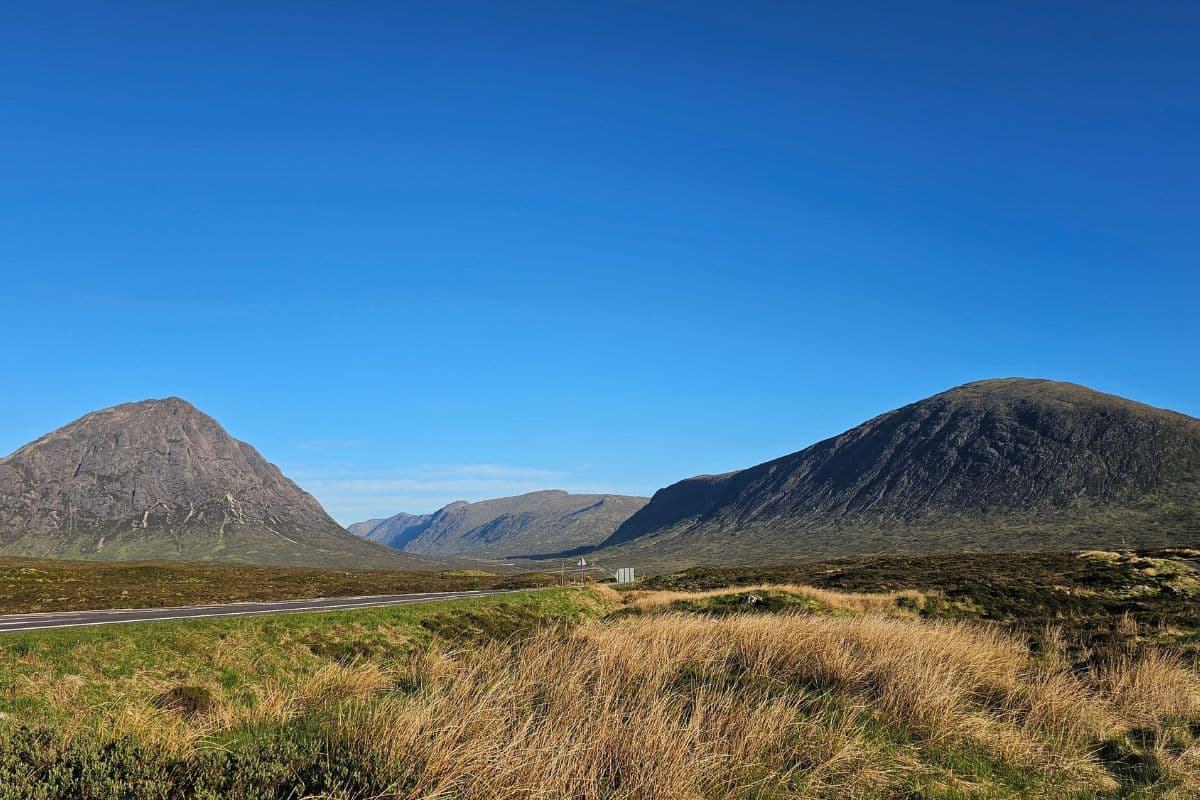
The morning climb from Bridge of Orchy up and over to the edge of Rannoch Moor rewards you with one of the most dramatic landscape transitions on the entire route. One moment you are in a green valley. Then you crest a ridge and the moor stretches to the horizon in every direction — vast, treeless, ancient and completely extraordinary. Rannoch Moor is one of the last true wildernesses in Scotland and walking across it with a toddler is an experience neither of you will forget. There is no shade anywhere on the moor — in summer heat this is a genuine challenge. Carry more water than you think you need and keep sun protection on your toddler throughout. Wild camping spots by the river on the moor are easy to find. After the exposure of the crossing the sound of running water when you pitch camp is everything.
Stace's Tip
No wildlife, no trees, no shade. Rannoch Moor is the most exposed section of the route. In hot weather start early and cover as much ground as possible before midday.
Day 11 — Rannoch Moor to Glencoe Mountain Resort
Distance: approximately 5-6km
Terrain: moderate — some climbing down into Glencoe
Overnight: Glencoe Mountain Resort campsite
A deliberately short recovery day after the moor crossing. The descent from the moor into Glencoe involves a real climb — you go up and over a shoulder of the mountain before dropping down to the resort — but at under 6km even with a toddler you will arrive early. Glencoe Mountain Resort is a ski centre that runs as a campsite and walker waypoint in summer. The staff are wonderful, the cafeteria serves hot food all day and the views of the Glencoe peaks are extraordinary. Plan to spend most of the afternoon here recovering, eating and watching the mountains.
Stace's Tip
Arrive early, eat everything, charge your devices, dry your gear. This is your last real comfort stop before Kinlochleven.
Day 12 — Glencoe Mountain Resort to Kinlochleven
Distance: approximately 14km — use baggage transfer for this day
Terrain: hard — includes the Devil's Staircase, highest point on the route
Overnight: Blackwater Campsite or accommodation in Kinlochleven
This is your hardest day. The Devil's Staircase climbs to 550 metres — the highest point on the entire West Highland Way — before a long descent into Kinlochleven. Use baggage transfer without question on this day. Walk with just your toddler and a day pack. The climb is relentless but manageable on a good path. The views from the top on a clear day are among the finest on the entire route — mountains in every direction, Glencoe behind you, the descent to Kinlochleven ahead. The descent into Kinlochleven is long and your knees will feel it. At 14km this is the biggest day in the itinerary. But Kinlochleven at the end of it is a proper little town — a shop, restaurants, accommodation options and the genuine feeling of having earned it.
Stace's Tip
The Devil's Staircase sounds worse than it is — it is a path, not a scramble. But carrying a toddler up it is hard work. Use the baggage transfer, use the Ergobaby without your full pack, and take your time at the top.
Day 13 — Rest Day in Kinlochleven
Distance: 0km
Overnight: Kinlochleven — second night
Take your second rest day of the trip here. Kinlochleven is a lovely small town tucked into the valley at the head of Loch Leven — there are good restaurants, a pub, a small ice climbing wall and the Ice Factor facility if your toddler needs some indoor entertainment. You are one day from Fort William. Rest, eat well and enjoy the last night before the finish.
Day 14 — Kinlochleven to Fort William
Distance: approximately 24km total — consider splitting or using transport for part
Terrain: moderate to hard — forest and mountain path
Overnight: Fort William — you are done
The final leg is the longest single day on the route at 24km. With a toddler there are two sensible options. Option A — Walk the full 24km over two days, stopping at a wild camp spot in the forest approximately halfway. This is the purest finish but requires an additional overnight that is not at a formal campsite. Option B — Walk to roughly the halfway point and take a taxi from the forest road to Glen Nevis Campsite, then walk the final 5km into Fort William the following morning. This is what I did and I have zero regrets.
Either way the last kilometres into Fort William are gentle walking along the River Nevis into town. And then you reach the sign.
More West Highland Way & Scotland Guides
- West Highland Way Packing List
- Driving in Scotland
- Planning a Trip to Scotland — Scottish Highlands Road Trip
Frequently Asked Questions
The official route takes around 8 days at adult pace. With a toddler, plan for roughly 14 days of 8 to 12km each, including two built-in rest days after the hardest sections.