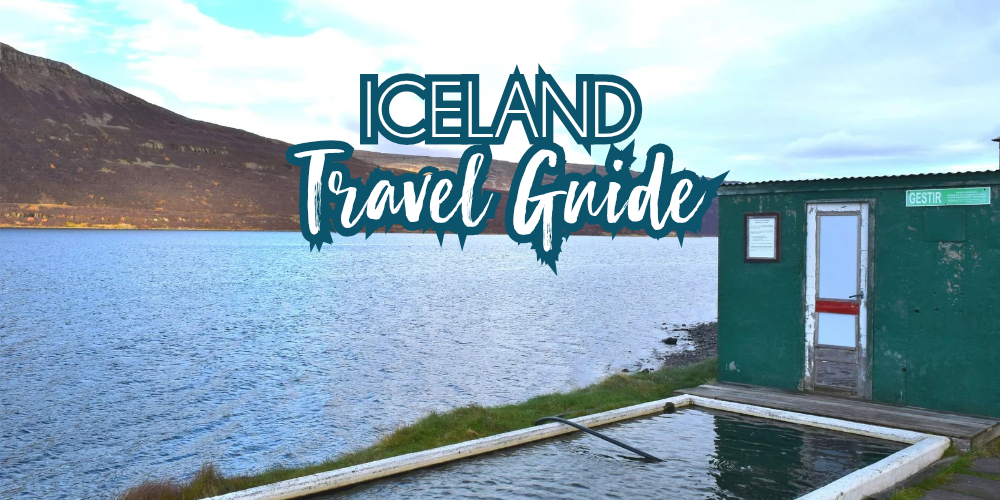
Iceland is one of those destinations that people talk about for years before they go and then can’t stop talking about after. Volcanoes, glaciers, geysers, waterfalls, hot springs, the Northern Lights, the midnight sun — no other country on earth packs this much extraordinary landscape into one island.
We spent 12 days driving the full Ring Road including the Westfjords in a campervan in mid-October and managed to cover the entire country. The weather was not perfect for much of it. It was still one of the most stunning trips of my life. This guide covers everything you need to plan your own Iceland road trip from scratch.
—
## Why Iceland
Iceland sits on the Mid-Atlantic Ridge — the point where the North American and Eurasian tectonic plates meet — which means the entire island is essentially one giant active geological event. Volcanoes that actually erupt. Geysers that go off like clockwork. Glaciers covering 10% of the land surface. Hot springs bubbling up from the ground seemingly at random. Waterfalls everywhere.
And almost no trees — Iceland was heavily deforested by early settlers and the climate makes regrowth difficult. On a clear day you can see for miles in every direction across open tundra and lava fields that look like the surface of another planet.
A few things that might surprise you: the majority of Icelanders genuinely believe in elves and hidden people. Roads have been rerouted to avoid disturbing rocks where elves are said to live. People have elf houses on their properties. It is completely sincere and completely wonderful. Also: Icelandic horses are the purest breed in the world — brought to the island by Vikings over a thousand years ago with no outside breeding since.
—
## When to Go
**Summer (June to August)** — Midnight sun, warmest temperatures, all roads open including the highland F-roads, wildflowers, puffins on the cliffs. Peak tourist season — busier and more expensive but the long days are extraordinary.
**Autumn (September to October)** — Shoulder season, cooling temperatures, Northern Lights starting to appear, significantly fewer crowds, most campsites still open. Some F-roads closing from mid-September. This is when we went and despite imperfect weather it was stunning.
**Winter (November to February)** — Northern Lights peak season, snow-covered landscapes, dramatic dark skies, but limited daylight hours, many campsites closed and some roads inaccessible.
**Spring (March to May)** — Snow melting, roads reopening, fewer crowds than summer, decent chance of Northern Lights still in March and April.
**The honest answer:** Iceland is worth visiting in any season. Go when you can afford to go. Pack for everything regardless of when you travel — the weather changes faster than anywhere I have been and four seasons in one day is not an exaggeration.
—
## Getting Around — The Campervan Question
The best way to travel Iceland is by campervan and this is not a travel cliché, it is practical reality. Iceland is essentially one main road — Route 1, the Ring Road — that circles the entire country. The campervan lets you stop wherever you want, sleep wherever you want and not worry about booking accommodation months in advance in a country where good hotels fill up fast.
We used **Camper Iceland** and rented a Jeep Super Camper which handled the varied terrain well. Book your campervan well in advance for summer travel — the good vehicles sell out months ahead.
**Campervan tips from the road:**
The Ring Road is a raised road with a drop off on either side which can feel narrow and intimidating at first, especially when trucks pass. Take your time, pull over to let traffic pass when needed and slow down when large vehicles approach — they create significant wind rocking at speed.
High winds are a real factor in Iceland. Strong gusts can push your vehicle across the road. Stay aware, pull over if conditions deteriorate and never open campervan doors in strong winds — they can be ripped off entirely.
Do not stop in the middle of the road for photographs. Iceland is one main road with real traffic. Pull over at the nearest layby and walk back for your shot.
Fill up your fuel tank whenever you see a petrol station. In the Westfjords especially you can go hours without seeing another car, let alone a fuel stop. We rolled into Patreksfjörður on fumes having misjudged the distance. Do not make the same mistake.
**The F-Roads:** Iceland’s highland interior is accessed via F-roads which require a 4×4 and are only passable in summer — roughly June to early September. After that they close. If you want the highlands plan accordingly.
—
## The Route — 12 Days Around Iceland
### Day 1 — Arrive at Þingvellir National Park
**Golden Circle region**
Land at Keflavík, pick up your campervan, stop at the nearest Bonus supermarket to stock up on food before leaving Reykjavik. Bonus is Iceland’s budget supermarket and doing a proper shop here before you head out saves significant money compared to buying food at tourist stops along the route.
Drive to Þingvellir National Park and set up camp. Þingvellir is where the North American and Eurasian tectonic plates meet and you can walk in the rift valley between them. It is also the site of Iceland’s ancient parliament — the oldest in the world — and a UNESCO World Heritage Site. A stunning first night in Iceland.
—
### Day 2 — The Golden Circle
**→ Read the full post: [Iceland Day 1 — The Golden Circle](https://wanderingbajan.com/iceland-day-1-golden-circle/)**
The Golden Circle is Iceland’s most famous day trip — a roughly 300km loop from Reykjavik covering three of the country’s most iconic attractions. Do not skip it just because it is popular. It is popular because it is extraordinary.
**Must see on the Golden Circle:**
– Þingvellir National Park — walk between the tectonic plates, dive Silfra if you are a diver
– Geysir and Strokkur — watch Strokkur erupt every few minutes like clockwork
– Gullfoss — the waterfall that stopped a hydroelectric dam being built here in the 1970s. Standing at the edge of it you understand why
– The Secret Lagoon — a natural hot spring pool in Flúðir, more authentic and less expensive than the Blue Lagoon
– Kerið — a volcanic crater lake, small entry fee, worth it
We ended the day camping near Seljalandsfoss and experienced genuinely terrible weather. In high winds avoid camping near mountains — find the nearest sheltered campsite and wait it out.
—
### Day 3 — Iceland’s South Coast
**→ Read the full post: [Iceland’s South Coast — Waterfalls and Glaciers](https://wanderingbajan.com/icelands-south-coast/)**
The South Coast drive is one of the most spectacular days on the entire route. Waterfall after waterfall, black sand beaches, glacier tongues reaching down to the road and the dramatic backdrop of Vatnajökull — Europe’s largest glacier — dominating the horizon.
**Must see on the South Coast:**
– Seljalandsfoss — walk behind the waterfall. Get wet. It is worth it
– Skógafoss — one of Iceland’s most powerful and beautiful waterfalls
– Sólheimasandur Plane Wreck — a US Navy DC-3 that crash landed in 1973, now an iconic photography location. Walk is about 4km return from the car park
– Reynisfjara Black Sand Beach — dramatic basalt columns and powerful surf. Do not turn your back on the waves — they are genuinely dangerous
– Vík — the southernmost village in Iceland, charming and worth a stop
– Skaftafell National Park — excellent base for evening camp
—
### Day 4 — Svartifoss, Jökulsárlón and the East
**→ Read the full post: [Iceland’s South Coast — Waterfalls and Glaciers](https://wanderingbajan.com/icelands-south-coast/)**
Start early and hike to Svartifoss waterfall in Skaftafell National Park — a stunning waterfall framed by perfectly hexagonal basalt columns that look almost architectural. Leave at dawn to have it to yourself.
The highlight of this day — and arguably the highlight of the entire trip — is Jökulsárlón glacier lagoon and the nearby Fjallsárlón. These are the bays where icebergs calve from the glacier and float out toward the sea. The ice is ancient — thousands of years old, compressed so densely that it glows electric blue. Icebergs the size of houses drift silently in water so cold and clear it looks unreal.
No matter how short on time you are, stop here. You will not regret it.
Take Route 939 on the drive toward Egilsstaðir if you have a 4×4 — a stunning detour with a beautiful waterfall fed by glacier water.
**Must see:**
– Svartifoss waterfall
– Fjallsárlón glacier lagoon
– Jökulsárlón glacier lagoon
– Höfn — good resupply stop
—
### Day 5 — Eastern Fjords to Lake Mývatn
**→ Read the full post: [Discovering Iceland’s Eastern Fjords](https://wanderingbajan.com/discovering-icelands-eastern-fjords/)**
The Eastern Fjords are one of the less visited sections of the Ring Road and are stunning for exactly that reason. Deep fjords cutting into the mountains, tiny fishing villages, waterfalls tumbling into the sea.
Make a morning detour to Seyðisfjörður — a small fjord town that is one of the most photogenic places in Iceland. A rainbow painted road leads to a blue painted church in a setting that looks almost impossibly picturesque. Worth every minute of the drive in.
From the Eastern Fjords the drive north toward Lake Mývatn passes through increasingly dramatic volcanic landscape. Mývatn itself sits in one of the most geothermally active areas on earth.
**Must see:**
– Seyðisfjörður — the rainbow road and blue church
– Krafla Volcano — active volcanic area with steaming vents and dramatic lava fields
– Hverfjall — a huge tephra crater you can walk around the rim of
– Dimmuborgir — extraordinary lava formations that look like a ruined city
– Lake Mývatn — beautiful lake in a volcanic landscape
– Mývatn Nature Baths — geothermal bathing pool fed by natural hot springs. Lower key and less expensive than the Blue Lagoon and in a far more dramatic setting. We would choose this over the Blue Lagoon every single time
—
### Day 6 — North Iceland — Waterfalls and Whale Watching
**→ Read the full post: [North Iceland — Volcanoes and Waterfalls](https://wanderingbajan.com/north-iceland-volcanos-waterfalls/)**
The North delivers on every front. This is a big day of driving with extraordinary stops along the way.
**Must see:**
– Dettifoss — one of the most powerful waterfalls in Europe. The volume of water going over this falls is overwhelming — you feel it in your chest before you see it
– Selfoss — just upstream from Dettifoss, quieter and equally beautiful
– Ásbyrgi Canyon — a horseshoe shaped canyon that legend says was formed by the hoof of Odin’s eight-legged horse Sleipnir. The geology says glacier burst. Both stories are good
– Húsavík — Iceland’s whale watching capital. If you have time book a whale watching tour here — humpback sightings are frequent
– Aldeyjarfoss — a waterfall surrounded by basalt columns, less visited than the south coast waterfalls and all the better for it
– Goðafoss — the Waterfall of the Gods, where a Viking chieftain is said to have thrown his Norse idols when Iceland converted to Christianity. Beautiful and historically significant
—
### Day 7 — Into the Westfjords
**→ Read the full post: [Iceland’s Westfjords — Hot Spring Hunting](https://wanderingbajan.com/icelands-westfjords-hot-spring-hunting/)**
The Westfjords are the most remote region of Iceland and the least visited. Not many tourists make it out this way and the landscape rewards those who do — deep fjords, dramatic cliffs and hot springs that you can have entirely to yourself.
This is a long driving day to get into the Westfjords from the north. We camped just outside Hotel Laugarhóll where there was a natural pool and some turf houses — a perfect evening stop after a long day on the road.
**Must see:**
– Laugarhóll hot spring pool — end the driving day with a soak
– The Westfjords scenery — the drive itself is the attraction here
—
### Day 8 — Hot Spring Hunting and Dynjandi
**→ Read the full post: [Iceland’s Westfjords — Hot Spring Hunting](https://wanderingbajan.com/icelands-westfjords-hot-spring-hunting/)**
The great joy of the Westfjords is finding hot springs that are genuinely off the beaten track. We drove toward Bíldudalur and did not see another car for hours — just us, the fjords and steaming pools of geothermal water in extraordinary settings. The full coordinates for the hot springs we found are in the dedicated Westfjords post.
Dynjandi is the crown jewel of the Westfjords — a tiered waterfall that fans out as it drops, wider at the base than the top, unlike any other waterfall in Iceland. Camp here and spend the evening watching the light change on the falls.
**Must see:**
– Wild hot spring hunting in the Westfjords *(coordinates in the dedicated post)*
– Dynjandi waterfall — do not miss this
—
### Day 9 — Látrabjarg and Rauðasandur
**Westfjords — southern section**
The southern Westfjords contain two experiences that are completely unlike anything else in Iceland.
Látrabjarg is Europe’s largest seabird cliff — a 14km stretch of vertical rock face up to 440 metres high. In summer it is covered in puffins, razorbills and guillemots nesting in the cliff face. The puffins here are famously unbothered by humans and will let you get remarkably close. Outside summer the birds have gone but the cliffs themselves are extraordinary.
Rauðasandur is a red sand beach — genuinely red, almost orange, completely unlike Iceland’s famous black sand beaches and all the more surprising for it. One of Iceland’s hidden gems and largely undiscovered by mainstream tourism.
Fill up your fuel tank in Patreksfjörður — this is essential. Do not leave without a full tank.
**Must see:**
– Látrabjarg cliffs
– Rauðasandur red sand beach
– Patreksfjörður — fuel stop, do not skip this
—
### Day 10 — Snæfellsnes Peninsula
**→ Read the full post: [From Snæfellsnes to Reykjavik](https://wanderingbajan.com/from-snaefellsnes-to-reykjavik/)**
The Snæfellsnes Peninsula juts out into the Atlantic on Iceland’s west coast and is sometimes called Iceland in miniature — glaciers, volcanoes, lava fields, black sand beaches, fishing villages and Kirkjufell, probably the most photographed mountain in Iceland, all within a relatively small area.
We had terrible weather and road closures on this day and missed much of the peninsula. It remains on the list for the return trip. If you have clear weather here you are very lucky — make the most of it.
**Must see:**
– Kirkjufell and Kirkjufellsfoss — the iconic mountain and waterfall beside it
– Snæfellsjökull glacier and national park — the glacier Jules Verne used as the entrance to the centre of the earth in Journey to the Centre of the Earth
– Arnarstapi — dramatic basalt arch coastline
– Eldborg volcanic crater
– Hraunfossar and Barnafoss waterfalls — a short detour worth making if time allows
—
### Day 11 — Reykjavik
**→ Read the full post: [From Snæfellsnes to Reykjavik](https://wanderingbajan.com/from-snaefellsnes-to-reykjavik/)**
Reykjavik is one of the most characterful small capitals in the world — compact, walkable, full of colour and personality and with a food and nightlife scene that punches well above its size. We loved it.
**Must see in Reykjavik:**
– Hallgrímskirkja — the iconic church that dominates the Reykjavik skyline. Take the lift to the top for views across the city and out to the mountains
– Harpa Concert Hall — stunning geometric glass architecture on the waterfront
– The old harbour — good restaurants and a lively atmosphere
– Try brennivín — Iceland’s signature spirit, made from fermented grain with caraway. Strong and distinctive
– Try hákarl if you are feeling brave — fermented Greenlandic shark that smells exactly as challenging as it sounds. A genuine cultural experience
– Walk the city streets — the colourful houses, the street art, the general energy of the place
—
### Day 12 — The Blue Lagoon and Departure
**→ Read the full post: [Is Iceland’s Blue Lagoon Overrated?](https://wanderingbajan.com/icelands-blue-lagoon-overrated/)**
The final morning. We camped near Grindavík the night before for an 8am Blue Lagoon opening, catching the sunrise over the milky blue water.
Is the Blue Lagoon overrated? It is expensive, it is busy and it is very much on the tourist trail. It is also genuinely spectacular — a vast geothermal pool of silica-rich water sitting in a black lava field with steam rising into the cold air. There is nothing else quite like it.
Book in advance — it sells out, especially for morning slots. The silica mud masks are included and genuinely work. Bring a hair tie if you have long hair — the silica will mat it.
Our honest verdict — do it once. It is a bucket list experience for a reason. But for pure geothermal bathing in a more authentic and far less crowded setting, the Mývatn Nature Baths in the north are better.
Drop off the campervan, head to Keflavík airport, fly home.
—
## The Best Hikes in Iceland
**→ Read the full post: [The Best and Most Beautiful Hikes in Iceland](https://wanderingbajan.com/best-hikes-in-iceland/)**
Iceland rewards hikers at every level. A few highlights:
**Fimmvörðuháls** — the pass between Eyjafjallajökull and Mýrdalsjökull glaciers, connecting Skógafoss to Þórsmörk. One of the most dramatic hikes in Iceland, passing through a lava field created by the 2010 eruption.
**Landmannalaugar** — highland hiking through rhyolite mountains in extraordinary colours — green, red, yellow, orange. Only accessible in summer via F-roads.
**Svartifoss** — short hike in Skaftafell National Park to the basalt column waterfall. Doable for most fitness levels, spectacular reward.
**Glymur** — Iceland’s second highest waterfall, accessible via a hiking trail that involves wading a river and crossing on a log. Genuinely wild and worth every step.
**Kirkjufell** — the iconic mountain on Snæfellsnes can be hiked. Steep and requires care but the views from the top are extraordinary.
—
## Practical Information
**Getting there:** Fly into Keflavík International Airport — well connected from the US, UK and Europe. Icelandair flies direct from many major cities. The airport is about 50km from Reykjavik.
**Campervan rental:** Book well in advance for summer. We used Camper Iceland and recommend them. Confirm what insurance is included — gravel protection is worth adding given Iceland’s road conditions.
**Fuel:** Fill up whenever you see a station. The Westfjords and highland areas can go long stretches without fuel.
**Money:** Iceland is expensive. Budget significantly more than you would for mainland Europe. Eating in the campervan rather than restaurants saves substantially. Bonus supermarkets are your friend throughout the trip.
**Weather:** Unpredictable at all times of year. Pack a proper waterproof, warm layers and wind protection regardless of season. The weather app Veður is the most accurate for Iceland specifically.
**Northern Lights:** Visible September to March in clear skies away from light pollution. The Aurora Forecast app gives real-time activity predictions. Get away from town and find dark skies.
**Midnight Sun:** Visible roughly mid-May to mid-July. The sun does not set. Pack a sleep mask.
**Safety:** Iceland’s emergency number is 112. Register your itinerary with safetravel.is before heading into remote areas — it is free and means rescue services know where to look if something goes wrong.
—
## Iceland Posts — Everything You Need
– [Epic Iceland Road Trip Itinerary for 12 Days](https://wanderingbajan.com/epic-iceland-roadtrip-itinerary-12days/)
– [Iceland Day 1 — The Golden Circle](https://wanderingbajan.com/iceland-day-1-golden-circle/)
– [Iceland’s South Coast — Waterfalls and Glaciers](https://wanderingbajan.com/icelands-south-coast/)
– [Discovering Iceland’s Eastern Fjords](https://wanderingbajan.com/discovering-icelands-eastern-fjords/)
– [North Iceland — Volcanoes and Waterfalls](https://wanderingbajan.com/north-iceland-volcanos-waterfalls/)
– [Iceland’s Westfjords — Hot Spring Hunting](https://wanderingbajan.com/icelands-westfjords-hot-spring-hunting/)
– [From Snæfellsnes to Reykjavik](https://wanderingbajan.com/from-snaefellsnes-to-reykjavik/)
– [Is Iceland’s Blue Lagoon Overrated?](https://wanderingbajan.com/icelands-blue-lagoon-overrated/)
– [The Best and Most Beautiful Hikes in Iceland](https://wanderingbajan.com/best-hikes-in-iceland/)
—
*Planning your Iceland road trip? Save this for later and grab our complete cold weather packing list below.*
*[CTA: Download the Complete Cold Weather Packing List — affiliate link]*