West Highland Way Packing List — What I Actually Carried with a Toddler on My Back
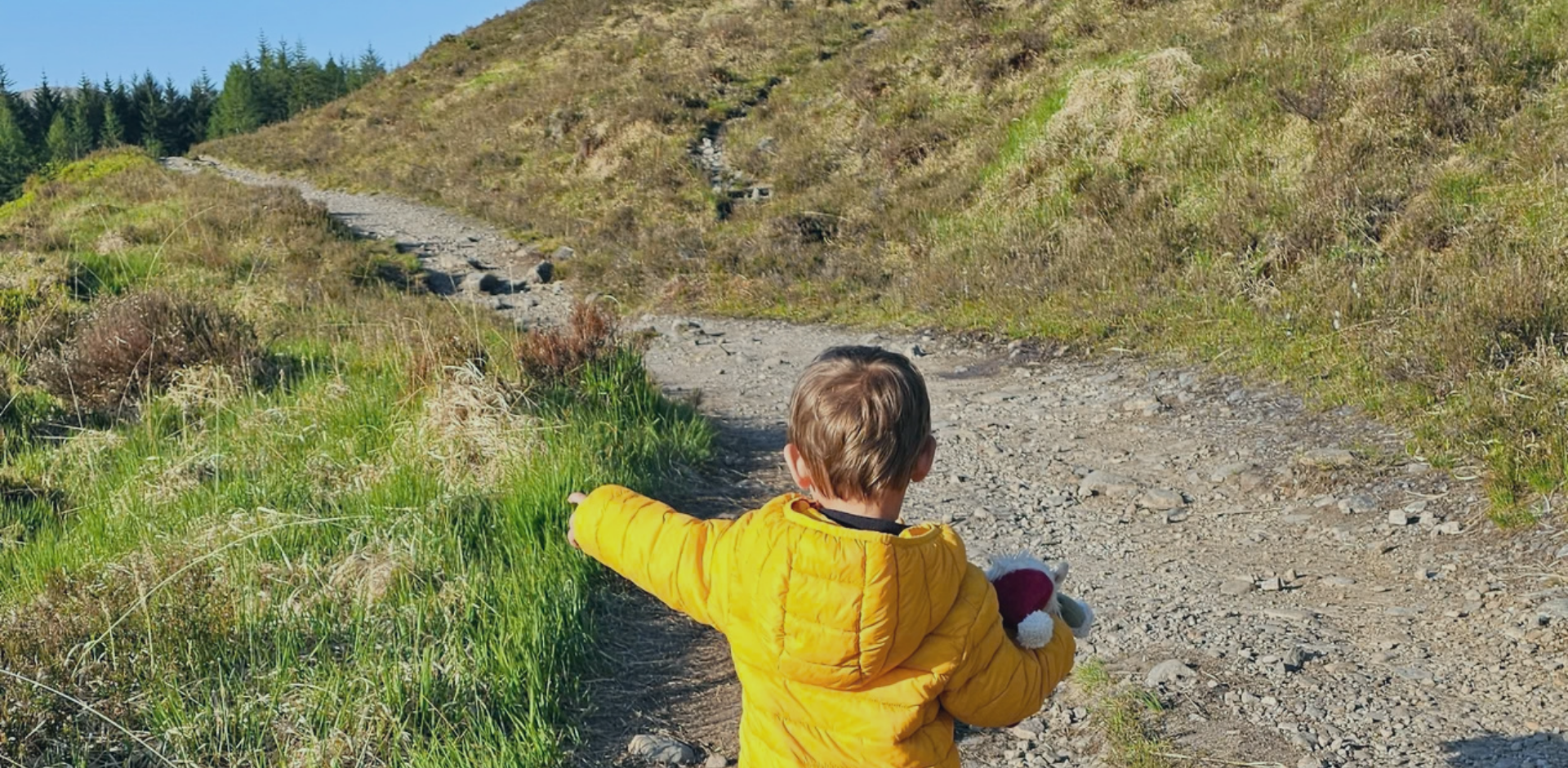
The West Highland Way is 96 miles of Scottish highland trail from Milngavie to Fort William. I walked it with Freddy — carried in a hiking carrier for the harder sections — over multiple days of wild camping, campsites and pub stops when civilisation presented itself. This is the exact kit I carried, what worked, what I wish I had done differently and everything you need to pack for the WHW whether you are going solo, with a partner or with a small human on your back.
One important caveat before the list: I walked it in summer and it was genuinely hot for Scotland — warm enough that I ditched my waterproofs after day one when a reliable forecast came through for the week. Pack your waterproofs anyway. Scotland weather is not to be trusted on the basis of a seven-day forecast. I got lucky. You might not.
My Pack
Osprey Renn 50L
Carrier
Trail Magik + Ergobaby 360
Sleep System
Klymit Double V + Thermarest Questar
Water
3L hydration pack + Sawyer filter
Choosing Your Pack
I carried the Osprey Renn 50L — a women’s specific pack with a well-designed hip belt and back system that distributes weight properly over a multi-day route. 50 litres is enough for a week of camping with careful packing and the right gear choices. I would not go smaller for the WHW, particularly if you are carrying any kit for a child.
The key with any multi-day hiking pack is fit over capacity. A poorly fitted pack at 40 litres is significantly worse than a well-fitted pack at 60 litres. Get it professionally fitted if you can before you go. The WHW is long enough that a bad fit becomes a serious problem by day three.
💡 Packing Tip
Heaviest items go closest to your back and as high as possible in the pack. Sleeping bag and pad at the bottom. Clothes and lighter items around the outside. Snacks, water and anything you need during the day in the lid or hip belt pockets. You will not want to unpack everything to find your lunch.
The Carrier System
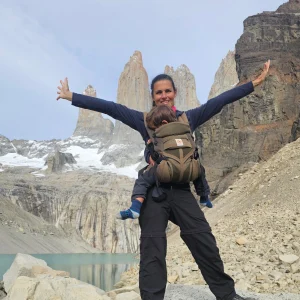
Carrying a toddler on a multi-day hike requires the right carrier — not just any baby carrier, but one designed for extended load-bearing over uneven terrain. I used two depending on the section:
- Trail Magik hiking carrier. The main carrier for the big mileage days and the harder terrain. Designed specifically for hiking with a child — proper frame, hip belt, load transfer system. If you are doing the WHW with a toddler this is the category of carrier you need. The difference between a proper hiking carrier and a soft structured carrier on a long day is enormous.
- Ergobaby 360. For shorter sections, town walking and when Freddy wanted to be close rather than up high. The Ergo is not a hiking carrier in the technical sense but for manageable distances it works well and is significantly more compact to pack.
💡 Carrier Tip
Practice with the carrier and a loaded pack before you go. Putting on a hiking carrier with a child in it and a full pack on your back simultaneously requires a system — figure it out at home, not at the trailhead on day one. Also train your toddler to stay still while you are putting it on. Freddy found this more amusing than helpful.
Sleep System
Sleeping with a toddler on a multi-day trail requires a different approach from solo camping. You cannot each have your own sleeping bag and pad without the weight and bulk becoming unmanageable. The solution is a shared system.
- Klymit Double V sleeping pad. A double inflatable pad that packs down small and provides a shared sleeping surface for two. Freddy and I slept on this together throughout the trip. Lightweight, packable and significantly more comfortable than a standard foam pad. The double width means you are not fighting for space with a sprawling toddler.
- Thermarest Questar sleeping bag. A quality three-season bag that handled Scottish summer nights comfortably. Shared between us with Freddy tucked in. Down insulation, good packability and the kind of bag worth investing in for regular camping use beyond a single trip.
💡 Sleep Tip
Scottish summer nights can still get cold — particularly at higher elevations and in the glens where cold air settles overnight. Do not underestimate the temperature rating you need. A three-season bag is the minimum for the WHW even in summer. A liner adds warmth and extends the range of your bag significantly.
Footwear
Footwear is the most important kit decision on any long distance trail. Get this wrong and the WHW becomes genuinely miserable. Get it right and your feet will carry you all the way to Fort William without drama.
- Regatta hiking boots — my footwear. Waterproof, supportive and comfortable across 96 miles of varied terrain. The WHW goes from well-maintained paths to rough moorland, rocky sections and boggy ground — you need a boot with ankle support and waterproofing, not trail runners. Crucially: break them in properly before you go. New boots on day one of the WHW is a mistake that will cost you in blisters.
- Merrell kids hiking shoes — Freddy’s footwear. For the sections where Freddy walked rather than rode. Merrell make genuinely good children’s trail shoes — grippy, supportive and robust enough for proper terrain. Worth the investment over standard trainers for any hiking trip.
- Compeed blister plasters. Pack more than you think you need. Apply them at the first sign of a hot spot, not after the blister has formed. Compeed on a forming blister can save a day. A formed blister on the WHW is a significant problem.
- Camp sandals or lightweight shoes. Something to change into at the end of the day. Your feet will thank you and it keeps the inside of your tent clean.
Clothing — Mine and Freddy’s
I walked in a t-shirt and leggings for most of the route — it was genuinely warm when I went and the leggings handled both the movement and the midges better than shorts would have. In hindsight I desperately wished I had packed my cut-off hiking pants. The heat on some days made full leggings uncomfortable and the cut-offs would have been perfect. Learn from this.
My Clothing List
- 2–3 technical t-shirts. Moisture-wicking, quick-dry. Merino wool is worth the price for multi-day hiking — it manages odour far better than synthetic and stays comfortable across multiple days between washes.
- Hiking leggings. What I wore daily. Comfortable, quick-dry and good midges protection. Would add cut-off hiking pants next time for hot days.
- Waterproof jacket. Pack it. Always pack it. I ditched mine after day one based on a good forecast and got away with it. You may not. Scotland does not negotiate with weather apps.
- Fleece or mid layer. For evenings at camp and early morning starts. Even in summer the Scottish highlands cool down significantly after dark.
- Warm hat and gloves. Lightweight, packable and essential for the exposed sections and cold mornings. Takes up almost no space and earns its keep.
- Merino wool base layer. For sleeping and cold days. Merino regulates temperature in both directions — warm when it’s cold, not unbearable when it’s not.
- 2–3 pairs of hiking socks. Merino wool hiking socks — Darn Tough or Smartwool are worth every penny. Blisters are a socks problem as much as a boots problem. Do not cheap out on socks for a 96-mile trail.
Freddy’s Clothing
- 2 long sleeve base layers. Quick-dry, sun protection and layers for the cooler sections. The long sleeves also help with midges — Scotland’s most irritating wildlife and a genuine consideration on the WHW, particularly in summer.
- Lightweight trousers. For the same reason — midge protection and warmth at camp.
- Warm layer. A lightweight down or fleece jacket for evenings. Children feel the cold faster than adults, particularly once they stop moving.
- Sun hat. Essential for days in the carrier when Freddy’s face is exposed. The Scottish sun is not Caribbean-strength but combined with altitude and reflection off water it is stronger than it looks.
- Waterproof layer. Even if you ditch your own. Keep the child’s waterproof. They cannot regulate temperature as effectively as adults and getting a toddler wet and cold on a remote trail section is not a situation you want.
Food and Water on the Trail
The WHW passes through enough villages and settlements with pubs and shops that you do not need to carry food for the entire route — but for wild camping sections between resupply points you need to be self-sufficient for several days at a time.
Dehydrated Meals
I made my own dehydrated meals rather than buying commercial options — butter chicken, cheesy chicken pasta and chilli. Home dehydrating gives you significantly better food than the commercial trail meal options, costs less and means you control exactly what goes in. A food dehydrator is worth the investment if you do regular camping and long-distance hiking. The meals rehydrate with boiling water in the bag — minimal washing up and genuinely satisfying after a long day on trail.
Water
The Scottish highlands have abundant clean water sources — rivers, streams and burns throughout the route. I carried a 3L hydration pack and filtered directly from water sources using a Sawyer Squeeze water filter. This setup eliminates the need to carry large quantities of water and keeps the pack weight manageable. The Sawyer is lightweight, reliable and pays for itself immediately versus buying bottled water.
- 3L hydration bladder. Keeps water accessible without stopping to get a bottle out of the pack. Essential for staying hydrated on long days.
- Sawyer Squeeze water filter. Filter directly from Scottish rivers and burns. Lightweight, reliable, no batteries and the water from Scottish highland sources tastes genuinely good.
- Snacks for the trail. Trail mix, energy bars, crackers, nut butter sachets. For Freddy — whatever he will reliably eat on the move. Familiar snacks from home travel better than introducing new foods on a long hiking day.
- Lightweight stove and fuel. For boiling water for dehydrated meals and morning coffee. A small canister stove is the right tool — reliable, simple and compact.
💡 Food Tip
The pubs along the WHW — Inverarnan, Tyndrum, Bridge of Orchy, Kinlochleven — are one of the great pleasures of the route. A hot meal and a cold drink at the end of a long day is worth building into your itinerary. Do not carry food for days when you know you will pass through a resupply point. Save the pack weight.
First Aid and Essentials
A basic first aid kit is non-negotiable on any multi-day trail, particularly with a child. Keep it accessible — not buried at the bottom of the pack.
- Children’s Panadol / paracetamol. Always in the kit. Fever, teething, general unhappiness at altitude — children’s paracetamol handles a surprising range of trail emergencies.
- Compeed blister plasters. The most-used item in the first aid kit on any long distance trail. Pack at least six.
- Plasters in various sizes. Children find things to cut themselves on regardless of the terrain. Have a selection.
- Antiseptic wipes and cream. For cleaning cuts and grazes in the field.
- Ibuprofen. For the days when your knees and shoulders remind you that you are carrying a child up a mountain.
- Tick removal tool. Scotland has ticks. The WHW passes through exactly the kind of vegetation they favour. Check yourself and your child every evening. A proper tick removal tool is safer and more effective than tweezers.
- Midge repellent — Smidge. The Scottish midge is real, relentless and most active in summer. Smidge is the most effective repellent available in the UK and it is worth bringing a bottle. Apply it every morning and evening. Do not underestimate the midges.
Toddler-Specific Kit
Everything a toddler needs on a multi-day trail is actually minimal — they are small, they sleep well after big days and they are genuinely adaptable to outdoor living in a way that surprises most people. The main additions to a standard kit list are the carrier, their sleep setup and something to keep them occupied at camp.
- Toy diggers. Freddy’s entertainment at every campsite, rest stop and pub garden on the entire route. A small metal toy digger weighs almost nothing and provides hours of entertainment in the dirt. Do not overthink toddler trail entertainment — they have the entire Scottish landscape to explore and a digger for the mud. That is enough.
- Familiar comfort item. Whatever your toddler cannot sleep without. On a trail where everything is unfamiliar, the comfort item matters more than usual. Keep it accessible and do not pack it in the hold equivalent — it stays in the top of the pack or in your hands.
- Sun protection. SPF 50 for children and a sun hat for the days in the carrier. Toddlers in carriers have no shade from the sun and you will be moving too fast to stop and apply repeatedly — start every morning with sunscreen applied.
- Nappy / pull-up supplies if needed. Pack more than you think. Wilderness nappy changes require preparation and there are limited bin options on wild camping sections — bring biodegradable bags.
- Spare clothes — more than you think. Scotland is muddy. Children are magnetically attracted to mud. Pack at least two complete sets of clothes for your toddler beyond what they are wearing.
Navigation and Tech
- OS Maps app or downloaded offline maps. The WHW is well-waymarked but signal is not reliable across the whole route. Download offline maps before you leave. The Harvey WHW map is also worth having as a physical backup.
- Headtorch. A good headtorch for camp, early morning starts and navigating to the toilet block at 3am. Scottish summer days are long but they do end.
- Power bank. Phone battery is your navigation, camera and communication. A decent capacity power bank keeps everything charged across multiple days between plug access.
- Waterproof phone case or dry bag. Scotland is wet. Your phone should not be.
What I Would Do Differently
It was so hot on the days we were walking that full leggings became uncomfortable. Cut-off hiking pants or zip-off trousers would have been perfect and I left mine at home. Lesson learned for every summer hiking trip since.
I got lucky. Scotland weather is not to be trusted. The waterproof jacket weighs almost nothing in a stuff sack — there is no good reason to leave it behind based on a seven-day forecast that Scotland will ignore anyway.
The midges in summer on the WHW are genuinely significant. I used what I had but would bring twice as much next time. Apply it morning and evening without fail.
Quick Reference
May – September
June and July for longest days and best weather. Late May avoids the peak midge season. September for autumn colour and fewer people.
7–9 days typical
Most walkers take 7–9 days. With a toddler build in extra time — shorter daily mileage and more flexibility makes for a better experience.
Aim for under 12kg
With a toddler in a carrier your total carried weight is significantly higher. Keep the pack as light as possible — every gram matters over 96 miles.
Smidge — bring plenty
Scottish midges are most active June to August, particularly at dawn and dusk near water and vegetation. Smidge repellent is the most effective option.
Legal in Scotland
Scotland’s Land Reform Act gives the right to wild camp responsibly. Leave no trace, use a trowel for waste, keep away from water sources.
Pubs and shops en route
Drymen, Tyndrum, Bridge of Orchy, Kinlochleven all have food options. Plan your wild camping sections around the resupply points.
More Adventure Travel
- Walking the West Highland Way with a Toddler — Day by Day Guide
- Patagonia with a Toddler and a Grandma
- Minimalist Adventure Packing Guide for Solo Mums
- The Best Toys and Activities to Keep Toddlers Entertained While Travelling
Get the complete toddler travel toolkit
32 pages covering long-haul flights, camping, hiking, packing lists and solo parent strategies — everything I know from travelling with Freddy from 8 weeks old.