Driving to Torres del Paine — Everything You Need to Know
Most people take the bus to Torres del Paine. We drove. And having done it — with a three year old, a grandmother and a boot full of camping gear — I can tell you that the drive itself is part of the experience in a way the bus simply isn’t.
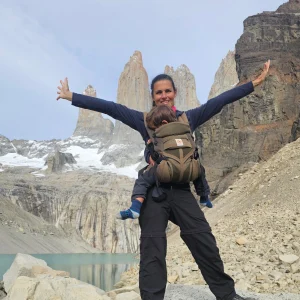
The road from Puerto Natales to Torres del Paine takes you through some of the most open, dramatic landscape in Patagonia before the park has even begun. The moment the Torres appear on the horizon — moody and cloud-wrapped on the way in, blazing clear on the way back — you will understand why people come to the end of the world for this.
This is everything you need to know to drive it yourself.
Start Point
Puerto Natales
Main Road
Ruta 9 north, then park road
Drive Time
~2 hours to park entrance
Car Rental
~$350 USD for 3 days incl. baby seat
Renting a Car in Puerto Natales
We picked up our car in Puerto Natales through LYS Car Rentals, who partner with 6th Rent A Car for their fleet. The whole process was straightforward — book online in advance, collect from their Puerto Natales office and you are on the road within the hour.
For three days including a baby car seat for Freddy, we paid around $350 USD. That included all the basics and given that the alternative is bus tickets, park transfers and the loss of total flexibility, it was worth every dollar.
Do You Need a 4×4?
Short answer: yes. The road from Puerto Natales to the park entrance is paved and perfectly manageable in a standard car. But once you are inside Torres del Paine the roads become gravel tracks — and they are rough. A 4×4 makes a meaningful difference to comfort and confidence on those surfaces. We would not have wanted to do the park roads in a standard vehicle. Book the 4×4.
💡 Rental Tip
Book your car well in advance for February travel — the same rule that applies to campsites applies to rental cars in peak season. LYS Rentals can arrange baby seats if you need one, but flag it at the time of booking so it is confirmed before you arrive.
Puerto Natales to Torres del Paine — The Drive In
~2 hours
Leaving Puerto Natales is straightforward — the town is small enough that you are out of it quickly and onto Ruta 9 heading north before you know it. From there it is essentially one road all the way to the park entrance. You cannot really get lost.
The drive takes around two hours and it earns its time. The landscape out of Puerto Natales is open Patagonian steppe — vast, flat and almost treeless, with the mountains sitting on the horizon getting gradually larger and more defined as you close the distance. The sky out here is enormous. You start to understand the scale of what you are driving toward.
When we drove in the mountains were wrapped in cloud — moody and dramatic and dark, the Torres hidden completely behind grey weather that made the whole landscape feel ominous in the best possible way. Patagonia presenting itself on its own terms.
At the park entrance you pay your entrance fee, get your park map and cross from tarmac onto gravel. From here the road inside the park winds through increasingly dramatic terrain — the mountains closing in, the colours changing, the sense of scale becoming genuinely hard to process. Take it slowly. Stop when you need to. The road is not the point — the landscape either side of it is.
💡 Driving Into the Park
Once you are on the gravel roads inside Torres del Paine, slow right down. The tracks are rough and there is no rush — you are already where you wanted to be. Keep your eyes on the road but pull over safely whenever you need to take it all in. There will be moments that demand it.
Parking at the Visitor Centre
Parking near the visitor centre and main trailhead is limited — more limited than you might expect for a park of this scale and reputation. When we arrived spaces were tight and it took a few minutes of manoeuvring to find our spot. It filled up. If you are arriving late in the morning in peak season, expect to circle.
We left the car at the visitor centre for the two nights we were on the trail and had no concerns about it. The car park is within the park, other travellers and staff are around, and we returned to find everything exactly as we left it. It felt safe and it was safe.
💡 Parking Tip
Arrive early if you can — the car park fills up as the morning progresses. Leave nothing of value visible in the car overnight. Standard travel sense applies here as everywhere.
Driving the Park — Salto Grande and the Miradors
~2 hours driving
On our second day we used the car to explore the park properly — driving out toward Salto Grande waterfall and stopping at every mirador along the route. It took about an hour each way, which tells you something about the distances inside Torres del Paine. This is not a compact park.
The Miradors — Go Twice If You Can
On the way out to Salto Grande the mountains were still largely cloud-covered — the same moody, dramatic grey we had driven in through the day before. The views were extraordinary even then. Patagonia under cloud is still Patagonia.
On the way back, the sun came out.
We had to stop at every single mirador again. The same viewpoints we had passed an hour earlier were completely different landscapes — the towers clear and sharp against blue sky, the colours of the steppe lit up, the lake a shade of turquoise that does not seem real until you are looking directly at it. We stood at viewpoints we had already visited and just looked.
This is Torres del Paine teaching you its most important lesson: the weather changes faster here than almost anywhere else on earth. What is grey and closed at 10am can be blazing and clear by noon. Build flexibility into your plans and never write off a day because of the morning forecast.
Salto Grande
Salto Grande is a powerful waterfall on the channel connecting Lago Nordenskjöld and Lago Pehoé — a short walk from the car park and completely worth the stop. The water thunders through a narrow channel with the mountains behind it and the Patagonian wind doing everything it can to push you sideways. It is loud and cold and brilliant.
💡 Wildlife on the Road
On the drive back from Salto Grande two guanacos came charging across the road directly in front of us — mid-fight, completely unbothered by the car, doing whatever guanacos do when they are sorting out their differences at speed. It was one of those completely unexpected wildlife moments that Patagonia throws at you when you are not looking for it. Keep your speed down on the park roads. The wildlife has right of way and absolutely knows it.
Driving Out — Back to Puerto Natales
~2 hours
The drive out of Torres del Paine and back down to Puerto Natales is the reverse of the drive in — Ruta 9 south, the steppe opening up around you, the mountains slowly receding in the rear view mirror. It is a quieter kind of drive. The park is behind you. The end of the world is still very much present.
We dropped the car back at Puerto Natales and that was that. Three days, one rental car, one three year old, one grandmother and more of Patagonia seen from the road than we would have managed on any bus schedule.
If you are on the fence about whether to drive — drive.
Practical Information
LYS Rentals / 6th Rent A Car
~$350 USD for 3 days including baby seat. Book well in advance for peak season.
4×4 recommended
Paved road to the park entrance, rough gravel tracks inside. A 4×4 makes a meaningful difference on the park roads.
~2 hours each way
Puerto Natales to park entrance on Ruta 9 north. Straightforward navigation — essentially one road all the way.
Visitor centre car park
Limited spaces — arrive early. Safe for overnight parking while you are on the trail. Leave nothing visible in the car.
Fill up in Puerto Natales
There is no fuel inside the park. Fill the tank completely before you leave Puerto Natales and don’t think about it again.
Expect everything
Cloud in the morning, sunshine by noon, back to wind by afternoon. The miradors are worth stopping at twice — going in and coming out — because the park looks completely different in different light.
More Patagonia
- Patagonia with a Toddler and a Grandma — Our Three Week Adventure
- The Best Toys, Activities and Hacks to Keep Toddlers Entertained While Travelling
- Walking the West Highland Way with a Toddler: A Realistic Day-by-Day Guide
- Minimalist Adventure Packing Guide for Single Moms Travelling with Toddlers
Bringing a toddler to Patagonia?
Grab the Toddler Adventure Travel Toolkit — 32 pages covering long-haul flights, camping, hiking, packing lists and solo parent strategies. Everything I know from taking Freddy to Torres del Paine at three years old.