The Complete Patagonia Travel Guide — Everything You Need to Plan Your Trip
Patagonia sits at the end of the world and it knows it. This is one of the most remote, most dramatic and most humbling landscapes on earth — a place where the scale of everything makes you feel genuinely small and genuinely alive at the same time. It is also, with the right planning, completely doable for anyone willing to go.
This guide covers everything you need to know to plan a Patagonia trip from scratch — the route, the seasons, the stops, the logistics and the practical details that will make the difference between a stressful journey and an extraordinary one.
Why Patagonia
Patagonia is the southern cone of South America — a vast region shared between Argentina and Chile, stretching from the Lake District in the north down to Tierra del Fuego and the Beagle Channel in the south. It is not a country, not a single park, not a single landscape. It is an entire world.
What defines it: granite towers rising vertically from glacial valleys. Glaciers the size of cities. Penguin colonies numbering in the hundreds of thousands. Wind so constant and so strong it becomes part of the landscape. Skies that change completely in minutes. Hiking trails through terrain that has barely been touched. And an almost complete absence of the noise and crowds that follow travellers everywhere else.
People talk about Patagonia for years before they go. They don’t stop talking about it after.
When to Go
Patagonia has a short peak season and shoulder seasons that are genuinely worth considering. The weather is unpredictable in every season — four seasons in one day is not an exaggeration — so the question is less about finding perfect weather and more about finding the right conditions for what you want to do.
December – February
The best weather, longest days and all trails fully open. Torres del Paine is at its most accessible and its most crowded. Book everything months in advance — campsites and refugios sell out. February is the sweet spot: school holidays winding down, conditions still excellent.
March – April
Significantly fewer people, cooling temperatures and extraordinary autumn colour in the lenga beech forests. Still good hiking conditions in March. Some facilities begin to close in April. A genuinely underrated time to visit.
May – August
Cold, dark and dramatic. Many campsites and some roads close. The W Trek in Torres del Paine is not recommended. But the landscapes in snow are extraordinary and the crowds are essentially zero. For experienced winter travellers only.
September – November
Everything reopening, wildflowers emerging, significantly fewer visitors than peak season. Weather is unpredictable even by Patagonian standards but the light can be extraordinary. A good option if December–February dates don’t work.
Getting There
Patagonia is remote. Getting there takes planning and usually more than one flight. The two main gateways are Ushuaia in Argentina (for the southern end) and Punta Arenas in Chile (for Torres del Paine and the middle section). Most travellers fly into Buenos Aires first and connect from there.
Southern Gateway
Ushuaia (USH) via Buenos Aires
Central Gateway
Punta Arenas (PUQ) via Santiago
Getting Around
Buses between all main stops
Self-Drive
Rental car possible from El Calafate or Punta Arenas
💡 Border Crossings
The classic Patagonia route crosses between Argentina and Chile multiple times. Buses handle this efficiently — just have your passport ready and declare any food you are carrying. Do not attempt to bring fresh meat, dairy or fruit across the border. The fines are significant and the searches are thorough.
The Classic Route — South to North
Most travellers do Patagonia south to north, starting in Ushuaia and finishing in El Calafate or El Chaltén before flying home. This is the route we took and it makes logical sense — you begin at the very end of the world and work your way back up through the highlights.
- Ushuaia, Argentina
The southernmost city in the world. End of the World Train, Tierra del Fuego National Park, Beagle Channel boat cruise. 3–4 nights. - Punta Arenas, Chile
Functional port city — worth stopping for the Magdalena Island penguin colony (120,000 Magellanic penguins). 1–2 nights. - Puerto Natales, Chile
The gateway town for Torres del Paine. Resupply, rest and prepare. 1 night is usually enough. - Torres del Paine, Chile
The centrepiece of any Patagonia trip. The W Trek, the full O Circuit or a day visit. 3–7 nights depending on your route. - El Calafate, Argentina
Base for Perito Moreno Glacier — one of the most extraordinary things you will see anywhere. 2–3 nights. - El Chaltén, Argentina
The hiking capital of Argentina, in the shadow of Mount Fitzroy. Free trails, extraordinary scenery, brilliant food. 3–4 nights.
Ushuaia — The End of the World
3–4 nights
Nothing prepares you for Ushuaia. It is a small city but it carries a weight that larger places don’t have — the knowledge that beyond it there is nothing but ocean and ice all the way to Antarctica. The buzz in the air is hard to explain and impossible to ignore. Every person you meet is either just back from somewhere extraordinary or about to leave for it.
The vibe is distinctly European — alpine architecture climbing up steep hillsides, a working port, restaurants and hostels packed with adventurers from every corner of the world. And the wind. Ushuaia is one of the windiest places I have ever stood. It does not gust — it howls, constantly, as if the landscape is reminding you exactly where you are.
What to Do
- End of the World Train + Tierra del Fuego National Park. A narrow gauge railway through sub-Antarctic scenery combined with a bus tour through the park — beaver dams, beech forest, Beagle Channel coastline. Perfect pace for any travel party.
- Beagle Channel boat cruise. Sea lions, cormorants and the Les Eclaireurs lighthouse. One of the most peaceful afternoons in Patagonia.
- Martial Glacier hike. Short hike above the city with views across the Beagle Channel on a clear day. Genuinely worth it.
- Eat king crab. Centolla — Patagonian king crab — is a local speciality and Ushuaia is the place to eat it. Order it at least once.
💡 Ushuaia Tip
Give Ushuaia the time it deserves. The end of the world feeling is real and it settles into you over a few days. Don’t rush through on the way to somewhere else — this is a destination in its own right.
Punta Arenas — Penguins in the Strait
1–2 nights
Punta Arenas is a functional port city — perfectly pleasant but not the most characterful stop on the route. There is one reason to come here and it is more than enough: Isla Magdalena.
Magdalena Island Penguin Colony
Isla Magdalena is home to around 120,000 Magellanic penguins during breeding season (November to March). One hundred and twenty thousand. The island is covered in them — waddling across the marked path, sitting in burrows, standing at the water’s edge looking deeply unimpressed by everything. You walk through the colony and the penguins are completely unbothered by your presence. They carry on with their penguin business as if you are barely worth noticing.
The boat crossing takes around two hours each way across the Strait of Magellan and can be choppy. Bring layers regardless of the weather forecast.
💡 Punta Arenas Tip
Book the Magdalena Island penguin tour before you leave home — it sells out, especially in February. One full day is enough time in Punta Arenas. Arrive, sleep, do the penguins, move on.
Puerto Natales — Gateway to the Park
1 night
Puerto Natales exists almost entirely as a gateway to Torres del Paine and it does that job beautifully. It has a lovely laid-back feel — good restaurants, outdoor gear shops and a waterfront with views across Ultima Esperanza Sound to the mountains beyond.
One night is the right amount of time. Use it to resupply, eat a proper meal, do a final kit check and mentally prepare for what’s coming.
💡 Puerto Natales Tip
Buy all your food and supplies for Torres del Paine here. The park is remote and expensive — stock up properly in Puerto Natales and you will save significantly over buying anything inside the park.
Torres del Paine — The Heart of Patagonia
3–7 nights
Torres del Paine is not a national park in the way most national parks are a national park. It is something else entirely. The scale is incomprehensible until you are standing in it. The weather changes in minutes. The landscape feels primeval — ancient, like the beginning of the world rather than the end of it.
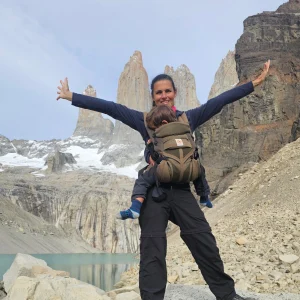
The park is dominated by the Paine Massif — a collection of peaks including the three famous granite towers (the Torres) that rise almost vertically from a turquoise glacial lake. There is also the Cuernos del Paine — the Horns — jagged peaks that appear in almost every photograph of the park.
The W Trek vs The O Circuit
Most visitors choose between two main routes. The W Trek is 4–5 days covering the most iconic sections of the park — the Torres, the French Valley and Grey Glacier. The full O Circuit adds the back side of the massif for a total of 8–10 days and significantly more solitude on the less-visited sections. Both are excellent. The W is right for most first-time visitors. The O is for those who want the full experience and have the time.
Campsites and Refugios
Accommodation in the park ranges from basic tent pitches to premium fully equipped campsites with rooftop tents, bedding and hot showers. The premium campsites at Chileno and Central are genuinely comfortable and worth the price — particularly with children or older travel companions. All accommodation sells out months in advance for the peak season.
Key Locations
- Mirador Las Torres. The lookout at the base of the three towers — the most iconic view in Patagonia. The final section is a steep scramble over glacial moraine. Hard going, non-negotiable.
- Valle del Francés. A dramatic hanging valley with glaciers above and condors riding thermals overhead. One of the most extraordinary walking days in the park.
- Grey Glacier. A 6km wide glacier at the end of the W. Iceberg-dotted lake, extraordinary blue ice, boat tours available.
- Mirador Condor. A short detour from the main trail with some of the best views of the Cuernos and the lake below.
💡 Torres del Paine Tip
Book your campsite or refugio accommodation the moment you know your travel dates — not when you book your flights, the moment you decide you are going. February slots at the premium campsites go in minutes. The CONAF registration system opens months in advance and it fills fast.
El Calafate — Glaciers and Blue Ice
2–3 nights
El Calafate is a tourist town built almost entirely around one reason to visit — Perito Moreno Glacier — and that one reason is more than enough. The town itself is pleasant and well set up for travellers with good restaurants and a relaxed feel after the intensity of Torres del Paine.
Perito Moreno Glacier
Perito Moreno is one of the few glaciers in the world that is not retreating and standing in front of it you understand why it commands such reverence. It is 5 kilometres wide and 60 metres high at the face. The ice groans and cracks constantly. Chunks calve from the face and crash into the lake below with sounds like cannon fire. The blue of the ice — a blue that has no equivalent anywhere else — is something no photograph adequately captures.
There are two ways to experience it: the walkways (a series of elevated catwalks above the shore directly in front of the face) and the boat tour (out onto the lake and up close to the ice wall). Both are extraordinary. The boat tour takes it to another level entirely — from the water, the scale becomes genuinely incomprehensible.
💡 El Calafate Tip
Do both the walkways and the boat tour if your budget allows. Book the boat through your accommodation the evening before. Arrive at the glacier early — the afternoon light on the ice is beautiful but the morning crowds are smaller.
El Chaltén — Fitzroy Country
3–4 nights
El Chaltén is a tiny hiking village at the end of a long road in the shadow of Mount Fitzroy. It exists for one purpose and it does that purpose beautifully. No traffic lights. No shopping centres. Just mountains, trails, extraordinary food and people who came here to walk.
It is also the only major hiking destination in Patagonia with no entrance fees for any of its trails — which is remarkable given what is on offer.
The Hikes
- Laguna de los Tres. The classic Fitzroy hike — 22km return with a brutal final climb to a high lake directly beneath the towers. One of the best day hikes in South America. Start early.
- Laguna Torre. A beautiful walk to a lake at the base of Cerro Torre — Fitzroy’s dramatic and slightly more forbidding neighbour. 18km return, less crowded than Laguna de los Tres.
- Laguna Capri. A shorter option — 8km return with steady climbing through lenga beech forest to a lake with Fitzroy views. Manageable for most fitness levels.
- Chorillo del Salto. An easy walk to a beautiful waterfall a few kilometres from town. Good for a rest day. If the clouds clear while you’re out here, Fitzroy appears above the rooftops of El Chaltén in a way that genuinely stops you walking.
💡 El Chaltén Tip
Give Fitzroy the time it needs to show itself. The mountain is frequently cloud-covered and it reveals itself on its own schedule. Build in enough days that you are not watching it from the bus window as you leave. Patience here is always rewarded.
The Best Hikes in Patagonia
The most iconic view in Patagonia. A steep final scramble over glacial moraine to the lookout at the base of the three granite towers. Hard, essential, unforgettable.
22km return with a brutal final climb to a high lake directly beneath Mount Fitzroy. One of the great day hikes in South America. Start before sunrise to have it to yourself.
A hanging valley on the W Trek with glaciers above and condors riding thermals overhead. One of the most dramatic walking days in the park.
18km return to a glacial lake beneath Cerro Torre. Less visited than Laguna de los Tres with equally extraordinary scenery.
8km return through lenga beech forest to a high lake with Fitzroy views. A manageable option for varied ability groups or families.
The full circuit of the Paine Massif — 8–10 days, significantly more remote than the W, with some of the most dramatic and least visited terrain in the park.
Practical Information
December – February
Peak season with best weather and all trails open. Book everything months in advance. March is a good shoulder season alternative.
Argentine Peso (ARS) + Chilean Peso (CLP)
You will use both. Argentina’s currency situation is complex — research the blue rate before you go and carry USD cash as backup.
Buses between all main stops
Efficient and well set up for travellers. International buses cross the Argentina-Chile border — book in advance. Self-drive is possible from El Calafate or Punta Arenas.
Unpredictable always
Pack a proper waterproof, warm layers and serious wind protection regardless of season. Four seasons in one day is not an exaggeration. The wind in Torres del Paine can genuinely knock you off your feet.
Book the moment you decide you’re going
Premium campsites and refugios sell out months in advance for January and February. The CONAF system opens early — check dates and book immediately.
Mid to high
Patagonia is not cheap. Torres del Paine especially. Save money by buying supplies in Puerto Natales before entering the park and eating at local restaurants rather than hotel dining throughout.
What to Pack
Patagonia demands proper kit. The wind alone justifies every purchase.
- Waterproof jacket — a good one. Not a fashion anorak. A proper hardshell that will handle horizontal rain and 80km/h gusts without complaining.
- Wind layers. Fleece mid-layer plus a windproof shell as minimum. The wind is the cold — block it and you are warm. Don’t block it and no amount of insulation helps.
- Hiking boots — broken in. Do not bring new boots to Patagonia. The terrain is varied, the distances are long and blisters at the base of the Torres would ruin everything.
- Trekking poles. Genuinely useful on the glacial moraine sections and on the descent from Laguna de los Tres. Not essential but worth having.
- Sunscreen and sunglasses. The UV at this latitude is brutal on clear days. The Patagonian light is extraordinary and it will burn you fast.
- Reusable water bottle. The water in Patagonia is clean and drinkable from most sources. Fill up wherever you can and reduce what you carry.
- Cash in USD. Particularly useful in Argentina given the currency situation. ATMs in smaller towns can run out — don’t rely on card access everywhere.
- Downloaded maps. Signal in the parks is minimal. Download offline maps on Maps.me or similar before you go and do not rely on Google Maps in the backcountry.
More Patagonia
- Patagonia with a Toddler and a Grandma — Our Three Week Adventure
- The Best Toys, Activities and Hacks to Keep Toddlers Entertained While Travelling
- Walking the West Highland Way with a Toddler: A Realistic Day-by-Day Guide
- Minimalist Adventure Packing Guide for Single Moms Travelling with Toddlers
Bringing a toddler to Patagonia?
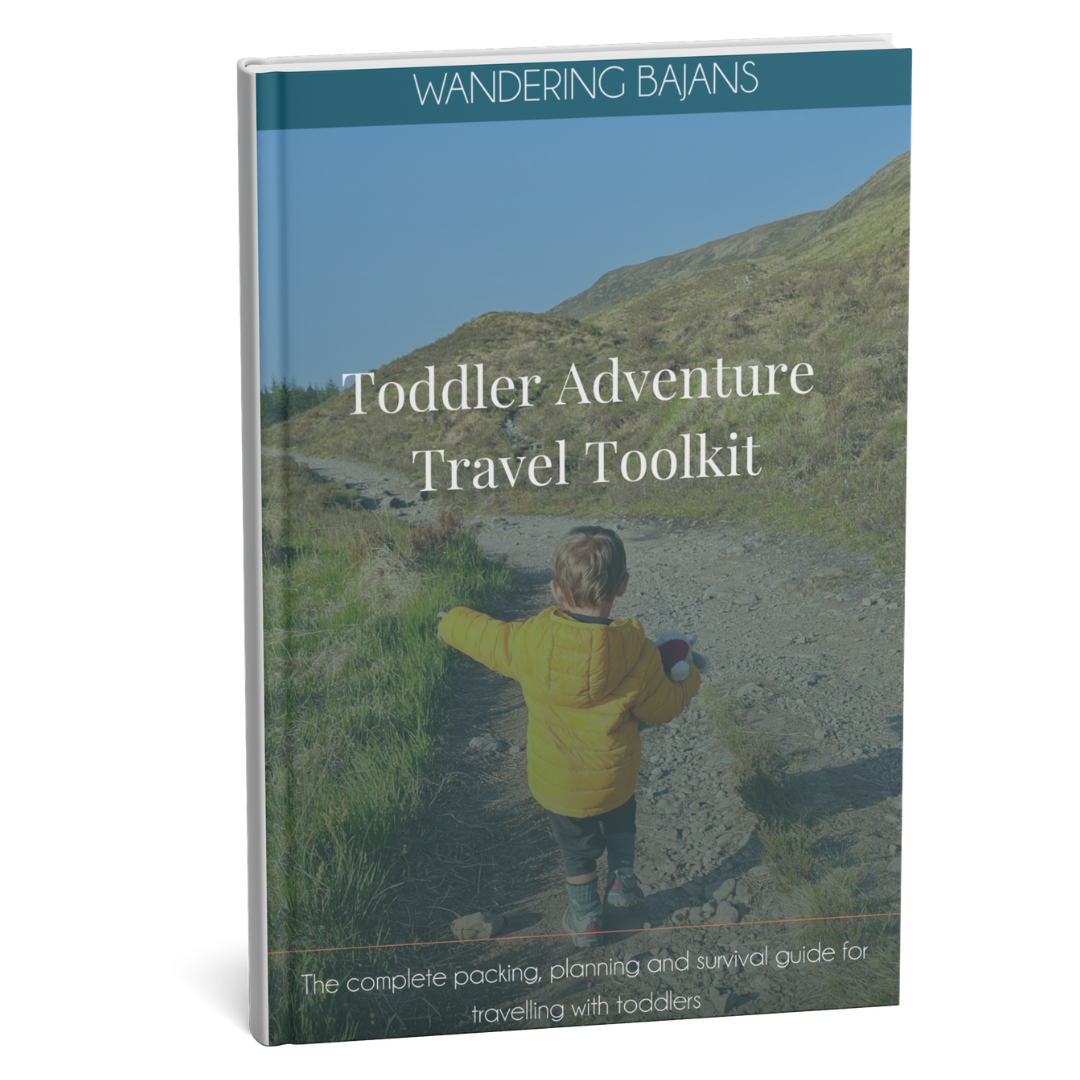
Grab the Toddler Adventure Travel Toolkit — 32 pages covering long-haul flights, camping, hiking, packing lists and solo parent strategies. Everything I know from taking Freddy to Torres del Paine at three years old.